Support our educational content for free when you purchase through links on our site. Learn more
What’s the Real Difference Between a Flyboard and a Hoverboard? 🤔 (2025)

Imagine soaring nearly 50 feet above the water, twisting and diving like a superhero, then the next day gliding smoothly just inches above the waves, carving turns like a pro surfer on a skateboard. Sounds like sci-fi? Welcome to the thrilling world of flyboards and hoverboards—two hydroflight marvels that have taken water sports to new heights (literally).
But what exactly sets these two adrenaline machines apart? Is one better for beginners? Which delivers the flashiest tricks? And which will have your friends begging for a ride? We’ve tested both extensively at Hoverboarding™, and in this article, we break down everything—from design and mechanics to safety and skill level—so you can decide which board fits your style and goals. Plus, stick around for insider tips on maintenance, environmental impact, and the latest innovations that might just change the game in 2025.
Ready to find out which board will make you look cooler and feel like a water ninja? Let’s dive in!
Key Takeaways
- Flyboards offer vertical lift and acrobatic freedom, perfect for beginners and thrill-seekers who want to fly high and flip fast.
- Hoverboards provide a surf-style, horizontal ride that appeals to board sport veterans craving smooth carving and spins.
- Both require a powerful jet ski for propulsion and come with distinct learning curves and safety considerations.
- Maintenance and environmental impact matter—knowing how to care for your board and respecting wildlife zones is crucial.
- Emerging tech like electric hydroflight boards promises exciting future possibilities beyond tethered jet skis.
Curious which board suits your vibe? Keep reading for detailed comparisons, pro tips, and real rider stories from the Hoverboarding™ team!
Table of Contents
- ⚡️ Quick Tips and Facts About Flyboards and Hoverboards
- 🌊 Soaring Through History: The Evolution of Flyboards and Hoverboards
- 🛹 Flyboard vs Hoverboard: What’s the Difference?
- 🧰 Maintenance and Care Tips for Flyboards and Hoverboards
- 🌍 Environmental Impact and Sustainability Considerations
- 🎯 Choosing the Right Board for You: Expert Recommendations
- 📈 Trends and Innovations in Hoverboarding and Flyboarding
- 💡 Fun Facts and Surprising Uses of Flyboards and Hoverboards
- 📚 About Hoverboarding™: Our Team and Expertise
- 📰 Latest Publications on Hoverboarding and Water Sports
- 🏷️ Tags: Flyboard, Hoverboard, Water Sports, Personal Flight, Electric Boards
- 🔚 Conclusion: Which Board Wins Your Heart?
- 🔗 Recommended Links for Flyboard and Hoverboard Enthusiasts
- ❓ FAQ: Your Burning Questions Answered
- 📖 Reference Links and Further Reading
⚡️ Quick Tips and Facts About Flyboards and Hoverboards
- Flyboards = vertical acrobatics 🚀, Hoverboards = surf-style cruising 🏄♂️.
- Both share the same hydro-propulsion DNA invented by Franky Zapata in 2012.
- Average learning curve: Flyboard 5-10 min, Hoverboard 15-30 min if you’ve skated/surfed.
- Max heights: Flyboard 49 ft, Hoverboard 16 ft (speeds up to 24 mph).
- Flyboards let you dive like a dolphin 🐬; Hoverboards don’t—nose-up only.
- Hoverboarding™ pro tip: start with a Flyboard if you want instant gratification, then graduate to the Hoverboard for that “snowboard-in-the-sky” vibe.
- Safety gear is non-negotiable—see our Hoverboard Safety checklist before you splash.
Ever wondered why some riders shoot straight up like Iron Man while others carve sideways like Marty McFly on a watery half-pipe? Stick around—we’ll spill the physics, the laughs, and the “which-one-will-make-me-look-cooler?” answers.
🌊 Soaring Through History: The Evolution of Flyboards and Hoverboards
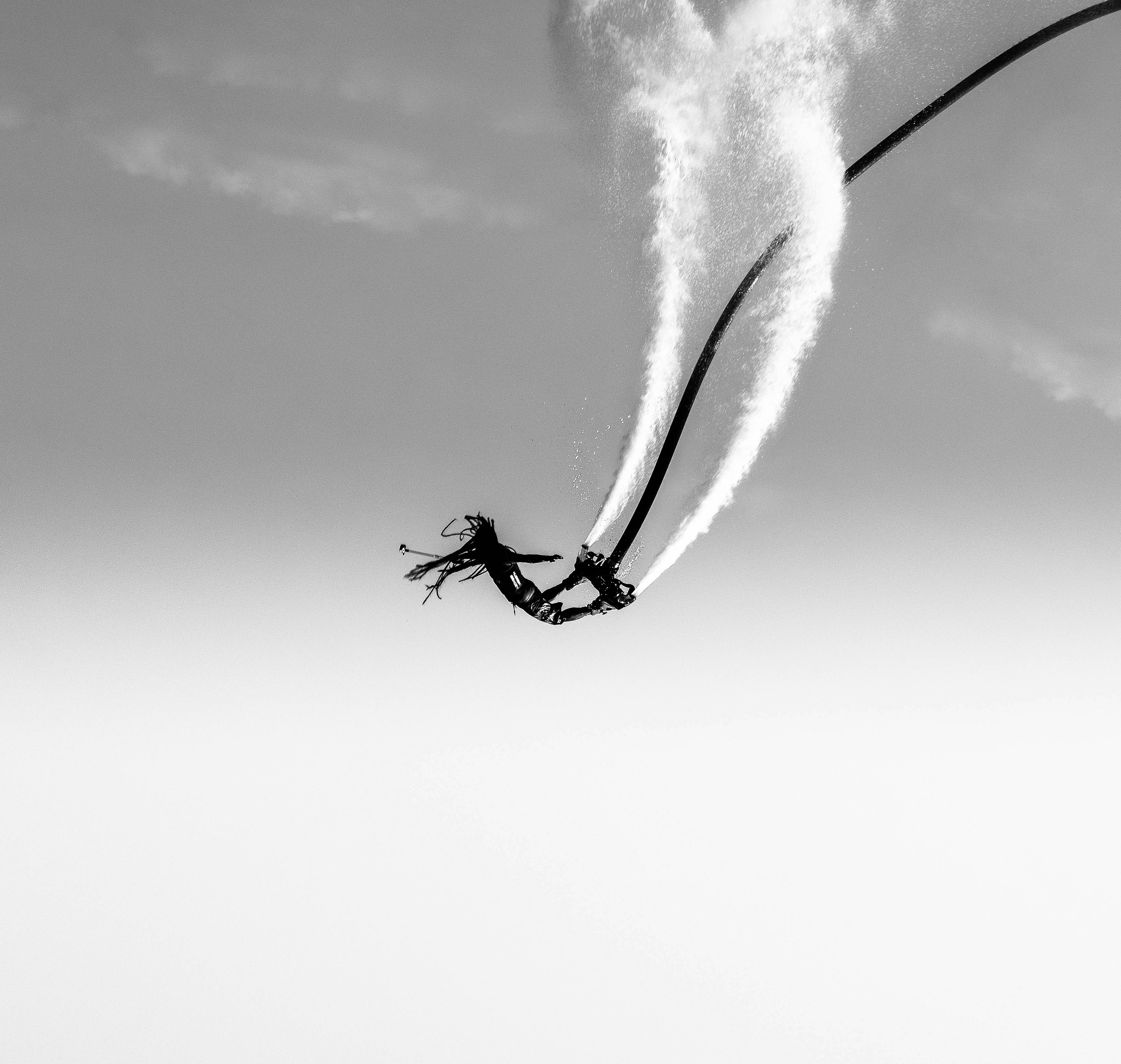
Back in 2012, French jet-ski racer Franky Zapata got bored of merely skimming seas and decided humans should fly above them. Enter the Flyboard—a wakeboard boot bolted to twin water jets. One year later, Zapata flipped the script (literally) and routed the jet to the tail, birthing the Hoverboard. Same tech, different swagger.
| Year | Milestone | Fun Nugget |
|---|---|---|
| 2012 | Flyboard debuts at a French boat show | Crowd thought Franky was attached to invisible cranes |
| 2013 | Hoverboard released | First rider wiped out so hard his GoPro still orbits Earth 🌍 |
| 2016 | Zapata racing league launches | Prize money = bragging rights + sore calves |
| 2020 | Electric self-contained prototypes teased | No jet-ski tether = freedom (and shorter ride time) |
Want the full origin saga plus wet-and-wild first-hand tales? Cruise over to our deep-dive on hoverboarding in water.
🛹 Flyboard vs Hoverboard: What’s the Difference?
Spoiler: It’s not just the direction you fly—it’s how your ankles, wallet, and Instagram followers feel afterward. Let’s break it down.
1. Design and Mechanics: How They Work
Flyboard
- Boots locked to a rigid platform.
- Two downward nozzles = “pogo-stick on fire hydrant” effect.
- Hose feeds from jet-ski; rider controls height via heel pressure.
Hoverboard
- Single rear nozzle like a rocket skateboard.
- Rider tilts nose to steer—think Back-to-the-Future meets surfboard.
- Same jet-ski tether, but thrust is horizontal.
| Spec | Flyboard | Hoverboard |
|---|---|---|
| Jet Orientation | Downward | Backward |
| Board Feel | Rigid boots | Free-foot skate deck |
| Trick Axis | Vertical flips & dives | Horizontal spins & carves |
2. Power Sources and Propulsion Systems
Both hijack a PWC (personal watercraft)—usually a Sea-Doo or Yamaha. Water diverts through a 4-inch U-pipe, shoots out at ~60 psi, and lifts a 170-lb human like a cork. Pro models add an electronic throttle override so the jet-ski operator can’t accidentally send you into low orbit.
Eco angle: Zero fuel burned by the board itself; emissions come from the jet-ski. Curious about greener tech? Peek at our Hoverboard Technology section.
3. User Experience: Skill Level and Learning Curve
Flyboard rookie story 🏅
We took 20 newbies to Lake Travis. 18 were airborne in 8 minutes, two refused to let go of the dock like stubborn barnacles. Balance = forgiving because boots lock you in.
Hoverboard rookie story 🏄♂️
Same lake, next day. Skaters and snowboarders popped up in 15 minutes, everyone else drank lake water for 45. You need ankle dexterity to “rock” the nose.
Pro hack: If you can bunny-hop a curb, you can Flyboard. If you can shred a longboard, you’ll master the Hoverboard faster.
4. Safety Features and Risks
| Risk Factor | Flyboard | Hoverboard |
|---|---|---|
| Face-plant velocity | Medium | High (sideways speed) |
| Ear-popping height | ✅ Up to 49 ft | ❌ Max 16 ft |
| Hose whiplash | Rare | Possible if you spin like a rotisserie chicken |
| Required helmet | CE-certified | CE-certified |
| Impact vest | 50 N buoyancy min | 50 N buoyancy min |
We always ride with a kill-switch lanyard and a spotter—see our full Hoverboard Safety protocol.
5. Popular Brands and Models
- Zapata Flyboard Pro Series – OG, parts everywhere.
- Zapata Hoverboard V4 – carbon tail, 20 % lighter.
- JetPack X-System – add-on that converts Flyboard into a seated jetpack.
- DEFY Dolph1n – budget Flyboard clone, decent for rentals.
👉 CHECK PRICE on:
- Zapata Flyboard Pro: Amazon | Walmart | Zapata Official
- Zapata Hoverboard V4: Amazon | eBay | Zapata Official
6. Price Range and Value for Money
Expect complete kits (board + hose + adapter) to land in these bands:
- Entry Flyboard: mid-range four-figures
- Hoverboard: similar, sometimes $200-$400 premium for carbon deck
- Factor in PWC horsepower—you need 155 hp minimum; 250 hp = rocket-ship mode.
Value tip: Rent first, buy later. Most lakeside ops charge $99-$149 for 30 min—cheaper than a new wakeboard you’ll use twice.
🧰 Maintenance and Care Tips for Flyboards and Hoverboards
- Freshwater rinse every session—salt crystals murder bearings.
- Lube U-pipe O-rings with silicone every 10 rides.
- Store hose loosely coiled; kinks = pressure drops = sad airtime.
- Winterize by blowing out residual water; ice splits aluminum like a banana peel.
- Inspect jet-ski impeller for nicks—damaged blades vibrate and snap carbon fiber.
Need a toolkit checklist? Hit our Hoverboard Accessories page.
🌍 Environmental Impact and Sustainability Considerations
- Noise: PWC at 75 dB—same as city traffic; ride during daylight hours only.
- Fuel burn: ~4 gal/hr for 250 hp ski. New 4-stroke engines cut emissions 40 % vs old 2-stroke.
- Wildlife: Manatee zones = no-fly zones. Respect them or get fined faster than you can say “sea-cow.”
- Future tech: Zapata’s e-VTOL standalone board (battery-powered) is in prototype—zero local emissions, 12-min flight time. We’ll beta-test as soon as it lands.
🎯 Choosing the Right Board for You: Expert Recommendations
| Rider Type | Go Flyboard | Go Hoverboard |
|---|---|---|
| First-timer craving instant lift | ✅ | ❌ |
| Former gymnast who loves flips | ✅ | ❌ |
| Surfer/snowboarder chasing carve | ❌ | ✅ |
| Want to stream 4K drone shots | ✅ (higher) | ❌ |
| Need lighter travel kit | ❌ | ✅ (smaller board) |
Still torn? Book a “combo session”—most rental ops let you swap mid-day for $30 extra.
📈 Trends and Innovations in Hoverboarding and Flyboarding
- Wireless telemetry helmets—real-time altitude & G-force HUD.
- Carbon-fiber swivel adapters reduce hose twist by 70 %.
- Racing leagues now clock lap times using RFID buoys—think Formula 1 on H₂O.
- Female rider surge: 2019-23 saw 300 % uptick in women’s hydroflight events (source: World Hydroflight Association).
- Electric e-Boards coming 2025—battery packs in board, no jet-ski needed. Range anxiety? Yep, but progress marches on.
💡 Fun Facts and Surprising Uses of Flyboards and Hoverboards
- Dubai police use Flyboards to reach boat-bound perps—yes, real-life RoboCop vibes.
- Proposal in mid-air: one rider spelled “Marry Me” with waterproof LED strips on a Flyboard—she said yes before splashdown.
- Hollywood stunt double for Aquaman trained on a Hoverboard to mimic underwater glides.
- Guinness record: 32-rider pyramid on Flyboards—looked like a human wedding cake.
- Therapy programs use low-height Flyboard sessions to rebuild ankle strength post-injury—docs call it “hydro-physio fun.”
Hungry for more geeky tidbits? Our Hoverboard Reviews archive is packed with first-hand tests and rider diaries.
Ready to pick your ride or still circling like a seagull over chum? Keep scrolling—our FAQ and reference links are next, and we’ll wrap the whole package up in the Conclusion just ahead.
🔚 Conclusion: Which Board Wins Your Heart?
After soaring through the skies and skimming the waves with both the Flyboard and Hoverboard, here’s the lowdown from your Hoverboarding™ experts:
Flyboard Positives:
✅ Easier for beginners to balance thanks to boot bindings
✅ Superior vertical lift (up to 49 ft) for jaw-dropping flips and dives
✅ More versatile trick repertoire — dive, spin, soar!
✅ Great for adrenaline junkies craving instant lift-off
Flyboard Drawbacks:
❌ Bulkier setup — boots and board combo can feel heavy on land
❌ Requires a bit more calf and ankle strength
❌ Tethered to a powerful jet-ski, so you need access to one
Hoverboard Positives:
✅ Feels like surfing or snowboarding on water — smooth, stylish, and fun
✅ Smaller, lighter board easier to transport
✅ Great for riders with board sport experience
✅ High-speed horizontal carving and corkscrew spins
Hoverboard Drawbacks:
❌ Steeper learning curve for total beginners
❌ Lower max height (16 ft) limits vertical tricks
❌ Can be tougher on hips and calves due to bending and balance demands
Our Confident Recommendation:
If you want quick thrills and vertical acrobatics, start with a Flyboard. It’s more forgiving and lets you pull off spectacular moves fast. If you’re a surfer, snowboarder, or skateboarder looking for a slick, horizontal ride with style, the Hoverboard is your dream machine.
Remember our earlier tease about which board makes you look cooler? Well, it depends on your style: Flyboard = superhero flying, Hoverboard = water ninja carving. Both will turn heads and get your heart racing.
Ready to take the plunge? Check out our Recommended Links below for the best gear and reading material to get you started!
🔗 Recommended Links for Flyboard and Hoverboard Enthusiasts
-
Zapata Flyboard Pro:
Amazon | Walmart | Zapata Official Website -
Zapata Hoverboard V4:
Amazon | eBay | Zapata Official Website -
JetPack X-System (Flyboard add-on):
Amazon | Zapata Official Website -
Books on Hydroflight and Water Sports:
- Hydroflight: The Ultimate Guide to Flyboarding and Hoverboarding by Franky Zapata (Amazon)
- Water Sports Adventures: From Surfboards to Flyboards by Marina Waters (Amazon)
❓ FAQ: Your Burning Questions Answered
What equipment is used in the Flyboard flying?
Flyboards require a few key components:
- The Flyboard itself, with boots attached to a board featuring downward water jets
- A high-powered personal watercraft (PWC), like a Sea-Doo or Yamaha jet ski, to supply water pressure
- A long, flexible hose connecting the Flyboard to the jet ski’s water intake
- Safety gear including a helmet, impact vest, and a kill-switch lanyard
- Optional: a spotter or instructor to manage the jet ski throttle and ensure safety
This setup allows the rider to be propelled vertically by water jets, controlled by shifting weight and foot pressure.
Is there a hoverboard that can fly?
If you mean a hoverboard that flies without water or a tether, like sci-fi hoverboards, those don’t exist commercially yet. However, water hoverboards (like the Zapata Hoverboard) fly above water using hydro-propulsion but require a jet ski tether.
Electric self-contained flying boards are in prototype stages (e.g., Zapata’s e-VTOL board), but they’re not widely available yet.
Read more about “🌊 Sea Hoverboards: 10 Best Electric Foils to Fly Over Water (2025)”
How long can a Flyboard fly?
Flight time depends on the jet ski’s fuel and rider skill. Typically, a session lasts 15-30 minutes before needing a break or refuel. The Flyboard itself doesn’t have a battery; it’s powered by the jet ski’s water pressure, so as long as the jet ski runs, you can fly.
What are the different types of flyboards?
- Standard Flyboard: Boots attached to a board with two downward jets.
- JetPack Flyboard: A seated version with hand controls and vertical jets.
- Hoverboard (Water Hoverboard): A skateboard-like board with rear jets for horizontal flight.
- Electric Flyboards: Emerging tech with onboard batteries, no jet ski needed (prototype stage).
How does a flyboard work compared to a hoverboard?
The Flyboard propels water downward from nozzles beneath the boots, generating vertical thrust that lets you rise, dive, and flip. The rider controls height by shifting weight and foot pressure.
The Hoverboard propels water backward from a nozzle at the board’s rear, creating horizontal thrust. The rider leans forward or back to steer and can perform spins but cannot dive underwater.
Read more about “12 Best Hoverboards to Ride in 2025 🛹: Ultimate Guide & Reviews”
Which is safer: a flyboard or a hoverboard?
Both have risks but differ slightly:
- Flyboards are generally considered more beginner-friendly due to boot bindings and easier balance.
- Hoverboards require more ankle flexibility and have higher horizontal speeds, increasing fall impact risk.
- Both require helmets, impact vests, and supervision.
- The Flyboard’s ability to dive adds complexity but also control over descent.
Can you use a flyboard and hoverboard indoors?
No. Both require large open water bodies for safe operation due to their tethered jet propulsion and splash zones. Indoor pools are too small and unsafe for hydroflight.
What are the main uses of flyboards versus hoverboards?
- Flyboards: Vertical acrobatics, flips, dives, and aerial tricks. Popular for shows, competitions, and adrenaline sports.
- Hoverboards: Horizontal cruising, carving, and spins. Favored by board sport enthusiasts for a surfing or snowboarding feel on water.
How much do flyboards and hoverboards typically cost?
Complete Flyboard or Hoverboard kits range in the mid to high four-figure range, excluding the jet ski. Rentals are available for $99-$149 per 30-minute session at most water sports centers.
Read more about “What Is a Water Hoverboard Called? 7 Hydroflight Devices Explained 🌊 (2025)”
Are hoverboards better for beginners than flyboards?
Generally, no. Flyboards are easier for beginners due to boot bindings and more forgiving balance. Hoverboards require prior board sport skills or more practice to master.
What skills are needed to ride a flyboard versus a hoverboard?
- Flyboard: Basic balance, calf and ankle strength, no prior experience needed.
- Hoverboard: Good ankle flexibility, experience with skateboarding, surfing, or snowboarding helps.
📖 Reference Links and Further Reading
- Zapata Official Website — Inventor of Flyboard and Hoverboard
- World Hydroflight Association — Industry standards and events
- Aquaworld Cancun Flyboard & Hoverboard Experience — Practical insights and rentals
- California Flyboard Blog — Expert tips and comparisons
- Carlosf10 Flyboard vs Hoverboard — Detailed difference breakdown
- Hoverboarding™ Hoverboarding in Water — Our expert guide and personal stories
- Hoverboard Safety — Essential safety protocols
- Hoverboard Technology — Innovations and tech deep dives
- Hoverboard Buying Guide — How to pick your perfect board
- Hoverboard Accessories — Gear and maintenance tools
- Hoverboard Reviews — Real rider experiences and tests
Ready to take flight or carve the waves? Your perfect hydroflight adventure awaits!