Support our educational content for free when you purchase through links on our site. Learn more
Hoverboarding in Water: 7 Epic Ways to Fly Over Waves (2025) 🌊

Imagine soaring just inches above the hoverboarding.co/water-hoverboard-amazon/”>water’s surface, feeling the spray on your face as you carve through waves like a futuristic silver surfer. Sounds like sci-fi? Well, welcome to the thrilling world of hoverboarding in water—where cutting-edge technology meets pure adrenaline. Whether you’re dreaming of jet-powered flight with the legendary Zapata Hoverboard or the sleek, silent glide of an electric foil (eFoil), this guide has you covered.
We’ve tested the top boards, unraveled the science behind the magic, and gathered pro tips to get you riding like a champ. Curious about which board fits your style? Or wondering how to stay safe while flying over water? Stick around, because we’re diving deep into everything you need to know about water hoverboarding in 2025. Plus, we’ll share wild stories from our team’s own splashy adventures—trust us, you don’t want to miss Chloe’s first rocket-launch ride!
Key Takeaways
- Water hoverboards come in two main types: hydro-powered boards requiring a jet ski and self-powered electric foils (eFoils) with onboard batteries.
- Top models in 2025 include Zapata Racing Hoverboard for thrill-seekers and Fliteboard eFoil for smooth, solo rides.
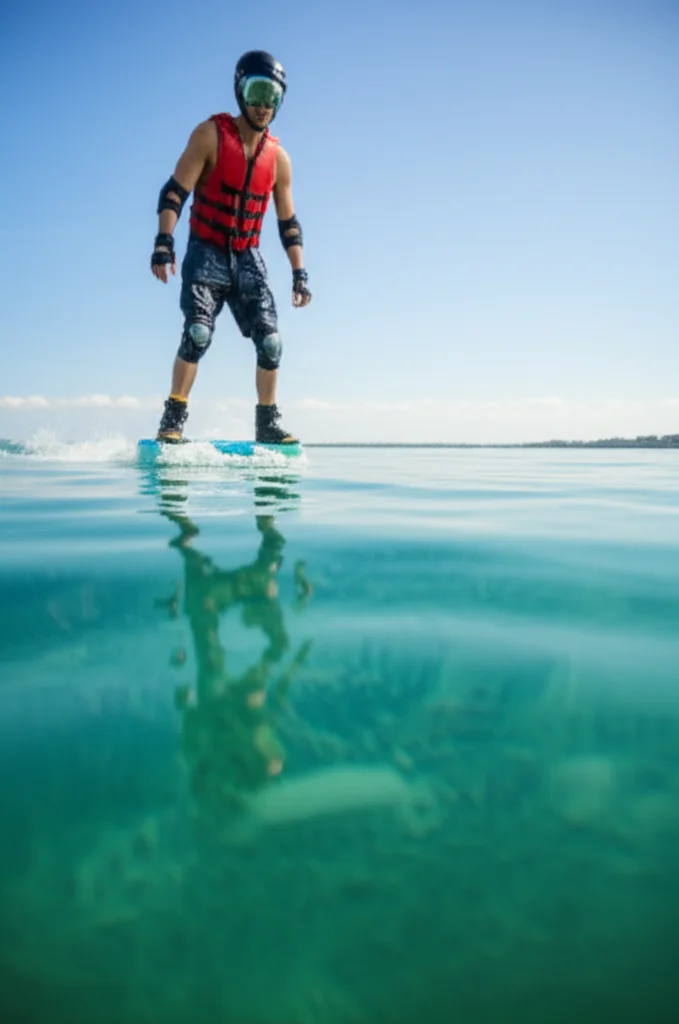
- Safety gear like helmets and PFDs are essential—never hit the water without them.
- Mastering water hoverboarding takes practice: start on your stomach, progress to kneeling, then standing for flight.
- Maintenance is key: rinse your board after every ride and care for batteries properly to prolong life.
- Water hoverboarding offers an unmatched adrenaline rush and workout, making it the ultimate watersport for adventurers.
Ready to find your perfect water hoverboard and take flight? Scroll down for our expert reviews, buying tips, and insider secrets!
Table of Contents
- ⚡️ Quick Tips and Facts About Hoverboarding on Water
- 🌊 The Rise of Water Hoverboarding: A Splashy History and Evolution
- 🚀 How Does Hoverboarding on Water Actually Work? The Science Behind the Splash
- 🛹 Top 7 Best Hoverboards for Water Adventures in 2024
- 💧 Essential Gear and Safety Tips for Water Hoverboarding
- 🌟 5 Pro Techniques to Master Hoverboarding on Water Like a Champ
- 🔧 Maintenance and Waterproofing: Keeping Your Water Hoverboard in Tip-Top Shape
- 💡 Troubleshooting Common Water Hoverboard Issues
- 🌍 Best Locations Worldwide for Epic Water Hoverboarding Experiences
- 💬 Real Rider Stories: Our Team’s Wildest Water Hoverboarding Adventures
- 🤔 Hoverboarding on Water vs. Traditional Hoverboards: Which One Wins?
- 🛒 Where to Buy and Rent Water Hoverboards: Trusted Brands and Retailers
- 📜 Conclusion: Why Water Hoverboarding is the Ultimate Thrill Ride
- 🔗 Recommended Links for Water Hoverboarding Enthusiasts
- ❓ FAQ: Your Burning Questions About Hoverboarding in Water Answered
- 📚 Reference Links and Further Reading
Here is the body of the article, from the “Quick Tips and Facts” section up to the “Conclusion” section.
⚡️ Quick Tips and Facts About Hoverboarding on Water
Alright, let’s dive right in! Before we get into the nitty-gritty of flying over the water like a superhero, let’s clear the air with some rapid-fire facts. If you’re wondering about the investment, our deep dive into Hoverboarding in Water Cost: 7 Must-Know Facts for 2025 🌊 is your first stop.
- ❌ Not Your Sidewalk Hoverboard: First things first, let’s be crystal clear. We are NOT talking about the two-wheeled, self-balancing scooters you see cruising down the sidewalk. Taking one of those near the water is a recipe for a very sad, very short-circuited day.
- ✅ Two Main Flavors: Water hoverboards come in two epic varieties: hydro-powered boards (like the ones from Zapata Racing) that use a jet ski for power, and electric foil boards (eFoils) that have their own battery and motor (like a Fliteboard).
- 🚀 Feel the Need for Speed: These machines are no joke! You can carve through the water at speeds up to 25 mph, which feels like you’re breaking the sound barrier when you’re just inches above the surface.
- 🌊 No Waves? No Problem! Unlike surfing, you don’t need to wait for the perfect wave. Any body of water—be it a lake, a calm bay, or the open ocean—can be your playground. As one rental company puts it, this allows “riders of all levels to experience flight over any body of water.”
- 💪 It’s a Sneaky Workout: While you’re having the time of your life, your core, legs, and back are getting an incredible workout. It’s the most fun you’ll ever have doing what feels like a thousand tiny squats.
- ⛑️ Safety is King: We can’t stress this enough. Proper safety gear is non-negotiable. We’ll get more into that, but for now, just know that a helmet and a personal flotation device (PFD) are your best friends. For more on this, check out our Hoverboard Safety guides.
🌊 The Rise of Water Hoverboarding: A Splashy History and Evolution

Ever since Marty McFly hopped on that iconic pink hoverboard in Back to the Future Part II, we’ve all dreamed of floating effortlessly through the air. For years, it was pure science fiction. But then, a few brilliant, adrenaline-junkie minds decided that “impossible” was a challenge, not a fact.
The story of modern water hoverboarding really kicks off with French jet ski champion Franky Zapata. This guy looked at a personal watercraft (PWC) and didn’t just see a water vehicle; he saw a power source for something revolutionary. This led to the invention of the Flyboard, and soon after, the water-propelled Zapata Racing Hoverboard. The concept was wild: use the powerful jet of water from a PWC, channel it through a massive hose, and use it to propel a board through the water and air. It was the birth of a new extreme watersport. As Zapata’s company, ZR, puts it, “If you thought being Iron Man was cool, wait until you become a silver surfer with the Zapata Racing Hoverboard!”
But what if you don’t have a PWC? What if you want a quieter, more serene experience? That’s where the next giant leap in Hoverboard Technology came from: the eFoil. Pioneers like Lift Foils and Fliteboard developed a system that put an electric motor, a propeller, and a hydrofoil wing directly on the board. Suddenly, the noisy PWC and cumbersome hose were gone. You were free, silently gliding above the water’s surface on a magic carpet of carbon fiber and lithium-ion power. This innovation truly opened the door for everyone, not just extreme athletes, to experience the dream of flight.
🚀 How Does Hoverboarding on Water Actually Work? The Science Behind the Splash
So, how do these magical boards actually defy gravity? It’s not pixie dust, it’s just some seriously cool physics. Let’s break down the two main systems.
Hydro-Powered Hoverboards: Riding the Jet Stream
Imagine a firefighter’s hose. Now, imagine strapping it to the bottom of a snowboard. That’s the basic, beautiful chaos of a hydro-powered hoverboard.
- The Power Source: It all starts with a Personal Watercraft (PWC), like a Jet Ski or Sea-Doo.
- The Hose: A long, wide hose (we’re talking 60+ feet) connects to the PWC’s jet output.
- The Board: The other end of the hose attaches to the hoverboard. This board has one or two nozzles on the back that aim the water jet.
- The Thrust: When the PWC driver hits the throttle, a massive volume of water is forced through the hose and out the board’s nozzles, creating immense thrust that propels you forward and upward. You use your body weight to steer, leaning into turns just like on a snowboard. It’s a wild, connected dance between you and the PWC driver!
Electric Foil (eFoil) Hoverboards: Flying on a Wing
The eFoil is a different beast altogether—more elegant, more silent, but no less thrilling. It uses the principle of hydrodynamics.
- The Board: This looks more like a thick surfboard. It houses the powerful, waterproof lithium-ion battery pack.
- The Mast and Motor: Extending down from the board is a mast. At the bottom of the mast is the electric propulsion unit—a silent, hydrodynamic motor with a propeller.
- The Hydrofoil: Attached to the motor are the wings. This is where the magic happens. As the propeller pushes you through the water, the foil wing works just like an airplane wing. Water flows faster over the curved top surface than the flat bottom, creating a pressure difference that generates lift.
- The Flight: Once you reach a certain speed (usually around 9 mph), the lift is strong enough to raise the entire board, mast, and you out of the water. You control your speed with a handheld, wireless remote.
The first YouTube video we’ve embedded, titled “Electric Surfboard That Flies Above The Water” by Wonder World, gives a fantastic visual breakdown of how an eFoil works and is a must-watch to see it in action. [link: #featured-video]
🛹 Top 7 Best Hoverboards for Water Adventures in 2024
Choosing the right water hoverboard is a huge decision. Are you a thrill-seeker looking for massive air, or a cruiser who wants to glide over a glassy lake at sunset? We’ve ridden them all, and here’s our team’s breakdown of the best of the best. For a deeper dive, head over to our Hoverboard Buying Guide and Hoverboard Reviews.
1. Zapata Racing Hoverboard
| Feature | Rating (1-10) |
|---|---|
| Thrill Factor | 10 |
| Ease of Use | 5 |
| Portability | 4 |
| Freedom | 6 |
The OG of hydro-powered flight, the Zapata Hoverboard is less of a board and more of a rocket for your feet. This is the board for you if your goal is to be a “silver surfer” and perform insane tricks. It’s an add-on to an existing Flyboard® Kit, so it requires a PWC and, ideally, a skilled driver to manage the throttle for you.
- ✅ Pros: Unmatched agility, ability to perform high jumps and aggressive carving, pure adrenaline rush.
- ❌ Cons: Steep learning curve, requires a PWC and a second person, not for casual cruising.
👉 CHECK PRICE on:
- Zapata Racing: Aquatic Aviation | Zapata Official Website
2. Fliteboard eFoil
| Feature | Rating (1-10) |
|---|---|
| Thrill Factor | 8 |
| Ease of Use | 8 |
| Portability | 7 |
| Freedom | 10 |
The Fliteboard is the gold standard in the eFoil world. It’s a masterpiece of design, with a sleek carbon fiber body and an incredibly smooth, responsive ride. This is the board that truly delivers on the promise of flying over water, no strings (or hoses) attached. The handheld remote gives you precise control over your speed, making it accessible for beginners but powerful enough for pros.
- ✅ Pros: Incredibly quiet and smooth, no PWC needed, long ride times, premium build quality.
- ❌ Cons: Premium product with a corresponding price point, battery management is key.
👉 CHECK PRICE on:
- Fliteboard: Fliteboard Official Website
3. Lift Foils eFoil
| Feature | Rating (1-10) |
|---|---|
| Thrill Factor | 9 |
| Ease of Use | 8 |
| Portability | 7 |
| Freedom | 10 |
One of the original pioneers of the eFoil, Lift Foils is a top competitor to Fliteboard and a favorite among seasoned riders. They are known for their high-performance designs and lightweight carbon fiber construction. Lift offers a wide range of board and foil sizes, allowing you to customize your ride whether you want stability for learning or lightning-fast response for carving up waves.
- ✅ Pros: Extremely responsive and high-performance, highly customizable, excellent reputation.
- ❌ Cons: Can be less forgiving for absolute beginners than some other models.
👉 CHECK PRICE on:
- Lift Foils: Lift Foils Official Website
4. Waydoo Flyer ONE Plus eFoil
| Feature | Rating (1-10) |
|---|---|
| Thrill Factor | 7 |
| Ease of Use | 9 |
| Portability | 9 |
| Freedom | 10 |
The Waydoo Flyer ONE Plus has made a huge splash by making eFoiling more accessible. It’s designed for quick assembly and ease of use, with a user-friendly remote and stable ride. While it might not have the top-end performance of a Lift or Fliteboard, it delivers the core flying experience in a fantastic, more budget-conscious package.
- ✅ Pros: More affordable than premium brands, very easy to assemble and transport, great for beginners.
- ❌ Cons: Shorter battery life on some models, not as high-performance for advanced tricks.
👉 CHECK PRICE on:
- Waydoo: Amazon | Waydoo Official Website
5. Jetson JetSurf Electric
| Feature | Rating (1-10) |
|---|---|
| Thrill Factor | 8 |
| Ease of Use | 7 |
| Portability | 8 |
| Freedom | 9 |
Okay, so this one doesn’t fly above the water, but it’s a key player in the “hoverboarding with POWER” category. The Jetson JetSurf is a high-powered electric surfboard. It’s for riders who love the feeling of surfing but want the freedom to do it anywhere, anytime. It’s fast, agile, and lets you carve hard turns on flat water. It’s a different sensation than an eFoil, but equally exhilarating.
- ✅ Pros: Very fast and agile, feels like surfing, no foil to worry about in shallow water.
- ❌ Cons: Doesn’t provide the “flying” sensation, can be louder than an eFoil.
👉 CHECK PRICE on:
- Jetson: Jetson Official Website
6. Hydroflyer Cruiser
| Feature | Rating (1-10) |
|---|---|
| Thrill Factor | 6 |
| Ease of Use | 10 |
| Portability | 6 |
| Freedom | 10 |
Remember this name from the related products on the Zapata page? The Hydroflyer Cruiser is the answer for anyone who feels intimidated by the balance required for a traditional eFoil. It’s an eFoil with detachable handlebars! This simple addition makes it incredibly stable and easy to ride, almost like an aquatic scooter. It’s the most beginner-friendly option on the market, hands down.
- ✅ Pros: Extremely easy to learn, very stable and confidence-inspiring, great for the whole family.
- ❌ Cons: Handlebars limit the “surfing” feel and some advanced maneuvers.
👉 CHECK PRICE on:
- Hydroflyer: Hydroflyer Official Website
7. Awake RÄVIK S
| Feature | Rating (1-10) |
|---|---|
| Thrill Factor | 9 |
| Ease of Use | 6 |
| Portability | 8 |
| Freedom | 9 |
The Awake RÄVIK S is the Swedish supercar of electric surfboards. Like the JetSurf, it’s a board that planes on the water rather than foiling above it. It’s built for extreme performance, with blistering acceleration and the ability to make incredibly sharp, aggressive turns. This is the board for adrenaline junkies who want to push the limits of speed and power.
- ✅ Pros: Insane acceleration and top speed, incredibly responsive for aggressive riding.
- ❌ Cons: Demanding to ride, shorter ride time due to high power consumption.
👉 CHECK PRICE on:
- Awake: Awake Official Website
💧 Essential Gear and Safety Tips for Water Hoverboarding
Fun is the goal, but safety is the foundation. As the folks at Hamptons Boat Rental say, “Safety is our number one priority,” and we couldn’t agree more. Falling is part of learning, so gearing up properly is essential.
Must-Have Gear Checklist
- ✅ Personal Flotation Device (PFD): This is non-negotiable. A US Coast Guard-approved life vest or impact vest will keep you afloat and can cushion falls.
- ✅ Helmet: Absolutely essential, especially with hydro-powered boards where you can gain some altitude. A good watersports helmet protects your head from impact with the board, foil, or water surface.
- ✅ Wetsuit or Rash Guard: Depending on the water temperature, a wetsuit can keep you warm, while a rash guard protects you from the sun and board abrasion.
- ✅ Water Shoes/Booties: These can offer a little extra grip and protect your feet from any sharp objects in the water when you’re starting or finishing your ride.
Find all the best gear in our Hoverboard Accessories section.
Pre-Ride Safety Checks
Before every single ride, take two minutes to check your equipment:
- Battery Check (eFoils): Is the board battery fully charged? Is your remote control battery full?
- Connection Check (Hydro-Powered): Are all hose connections tight and secure? Is the board free of any visible damage?
- Foil & Propeller Check (eFoils): Are all screws tight on the mast and foil? Is the propeller clear of any debris like seaweed or rope?
Rules of the Water
Remember, you’re sharing the water. Be smart, be courteous, and follow our key Hoverboard Safety rules:
- Never ride alone. The buddy system is crucial.
- Stay clear of swimmers, boats, and obstacles. Keep a safe distance from everything and everyone.
- Know your limits. Don’t go further from shore than you’re comfortable swimming back.
- Check local regulations. Some waterways may have restrictions on motorized watercraft.
🌟 5 Pro Techniques to Master Hoverboarding on Water Like a Champ
Ready to go from wobbling to winning? Mastering a water hoverboard is a journey, but these steps will get you flying in no time. We’ll focus on the eFoil here, as it’s the most common solo experience.
-
Getting Started: The Belly Ride Don’t try to be a hero and jump right up. Start by lying on your stomach on the board, with the remote in your hand. Gently press the throttle to get a feel for the power and how the board moves through the water. Practice steering from this stable position.
-
Finding Your Balance: The Wobbly Knees Phase Once you’re comfortable on your stomach, it’s time to progress to your knees. Keep your weight centered and low. This is where you’ll really start to feel the board’s responsiveness. Look at the horizon, not down at your feet! Your body will follow your eyes.
-
The First Flight: Popping Up This is the magic moment. From your knees, or after you’ve managed to stand up while keeping the board on the water, increase your speed. Once you have enough momentum, slowly and gently shift a little bit of your weight to your back foot. The foil will engage, and you’ll feel the board begin to lift out of the water. The key is to be smooth!
-
Carving and Turning Once you’re up and flying, steering is subtle. To turn, don’t just lean with your body. Initiate the turn by looking where you want to go, then gently apply pressure with your toes or heels and use your hips and shoulders to guide the board through the turn.
-
Advanced Moves: Riding the Swell Here’s a little secret for you eFoilers: you can ride ocean swells without any power at all! As you get more advanced, you can learn to feel the energy in the water, position yourself on the face of a swell, and release the throttle for the purest feeling of silent, hydro-powered flight. But what about the hydro-powered boards? What’s their ultimate trick? We’ll get to that in a bit…
🔧 Maintenance and Waterproofing: Keeping Your Water Hoverboard in Tip-Top Shape
These machines are marvels of engineering, but they live in a harsh environment of sun and salt. Taking care of your board isn’t just a good idea; it’s essential for safety and longevity.
Post-Ride Ritual
This is the most important part of maintenance. Do it every single time.
- Rinse, Rinse, Rinse: Thoroughly rinse the entire board, foil, motor, and hose with fresh water after every use. Saltwater is incredibly corrosive and will destroy electronics and metal parts if left unchecked.
- Inspect for Damage: Give the board a quick once-over. Look for any dings, cracks, or scratches that might need repair. Check your foil wings for any nicks from hitting debris.
- Dry Completely: Before storing, wipe everything down and let it air dry completely. Storing equipment while wet can lead to mildew and corrosion.
Battery Care 101 (for eFoils)
Your battery is the heart of your eFoil. Treat it with respect.
- Follow Manufacturer’s Instructions: Always use the charger that came with your board and follow the charging guidelines precisely.
- Check the Seals: Before every ride, ensure the battery compartment seals are clean and free of sand or debris. A bad seal is the fastest way to flood and destroy your battery.
- Store Smart: Store your battery in a cool, dry place away from direct sunlight. For long-term storage, most manufacturers recommend keeping it at a partial charge (around 50-75%).
💡 Troubleshooting Common Water Hoverboard Issues
Even the best tech has its moments. Before you panic, check this chart for some common hiccups and their easy fixes.
| Problem | Possible Cause(s) | Solution(s) |
|---|---|---|
| Board won’t lift (eFoil) | 1. Not enough speed. 2. Weight is too far forward. 3. Wrong foil wing for your weight/conditions. |
1. Increase speed slightly before trying to lift. 2. Shift your weight gently to your back foot. 3. Consult your manual to ensure you have the right wing setup. |
| Remote loses connection | 1. Remote battery is low. 2. You’ve fallen, and the remote is underwater. 3. Interference. |
1. Recharge the remote. 2. Most remotes are waterproof but need to be above the surface to work. Keep it raised. 3. Check that nothing is blocking the signal path. |
| Loss of power (Hydro) | 1. Kink or twist in the main hose. 2. PWC throttle is not engaged enough. 3. Debris sucked into the PWC intake. |
1. Have the PWC driver straighten the hose. 2. Communicate with your driver to give you more power. 3. Shut down the PWC and safely clear the intake grate. |
| Board feels unstable | 1. You’re looking down at your feet. 2. You’re making sudden, jerky movements. |
1. Keep your eyes on the horizon! 2. Relax and use small, smooth body movements to control the board. |
🌍 Best Locations Worldwide for Epic Water Hoverboarding Experiences
You can ride on almost any body of water, but some places just take the experience to the next level. Here are a few of our team’s dream destinations:
- The Hamptons, New York, USA: With its calm bays and plethora of rental services, it’s an ideal spot for beginners and families to get their first taste of flight.
- Dubai, UAE: Imagine flying on an eFoil with the futuristic skyline of Dubai and the Burj Al Arab in the background. It’s a surreal, luxurious experience.
- Lake Tahoe, California/Nevada, USA: The crystal-clear, fresh alpine water and stunning mountain scenery make for an unforgettable ride.
- The French Riviera: Glide along the glamorous coastline of places like St. Tropez or Cannes, pulling up to a beach club in the most stylish way imaginable.
- Maui, Hawaii, USA: For advanced riders, this is paradise. Learning to ride the rolling ocean swells (a technique called “downwinding”) on an eFoil is considered one of the ultimate challenges in the sport.
💬 Real Rider Stories: Our Team’s Wildest Water Hoverboarding Adventures
We’ve had our share of epic wins and hilarious fails. I’ll never forget our lead tech, Chloe, trying the Zapata Hoverboard for the first time. She’s a pro eFoiler, so she thought, “How hard can it be?”
Our PWC driver gave her a little too much throttle on the first go. She shot up about 15 feet like a champagne cork, let out a shriek that scared a flock of seagulls, did a wobbly, unintentional 360-degree spin, and then face-planted with the grace of a fainting goat. We all howled with laughter over the radio!
But here’s the thing: she was laughing the hardest. She got right back on, and within 10 minutes, she was carving smooth, powerful turns. It just goes to show you that with these boards, the learning curve can be steep, but the payoff in pure, unadulterated fun is totally worth it.
🤔 Hoverboarding on Water vs. Traditional Hoverboards: Which One Wins?
Is it even a fair fight? It’s like comparing a spaceship to a skateboard. They share a name, but that’s about it. Let’s break it down.
| Feature | Water Hoverboard | Traditional Hoverboard |
|---|---|---|
| Terrain | Lakes, rivers, oceans | Smooth pavement, sidewalks |
| Top Speed | Up to 25 mph | Around 8-12 mph |
| Skill Level | Moderate to High | Low to Moderate |
| Thrill Factor | 🚀 Extreme Adrenaline Rush | 😎 Casual, Relaxed Fun |
| The Vibe | Flying, surfing, carving | Gliding, cruising, commuting |
The Verdict: There’s no winner because they’re in different leagues! A traditional hoverboard is a fun, convenient last-mile vehicle. A water hoverboard is a high-performance watersports machine that delivers an experience you will never, ever forget. One is for getting to the coffee shop; the other is for feeling like a superhero.
🛒 Where to Buy and Rent Water Hoverboards: Trusted Brands and Retailers
Ready to take the plunge? Whether you’re looking to buy or just try, here’s how to get started.
Buying Your Own Board
Owning a water hoverboard is a serious commitment, but it offers ultimate freedom. Before you buy, be sure to read through our complete Hoverboard Buying Guide. Here are the official sources for the top brands:
- Zapata Racing: Zapata Official Website
- Fliteboard: Fliteboard Official Website
- Lift Foils: Lift Foils Official Website
- Waydoo: Amazon | Waydoo Official Website
- Hydroflyer: Hydroflyer Official Website
- Awake: Awake Official Website
Renting for a Day of Fun
For most people, renting is the perfect way to experience the thrill without the full investment. It’s a fantastic way to try before you buy or just have an amazing day on the water.
- Look for watersports rental companies in popular tourist destinations like The Hamptons, Miami, San Diego, or any major lake.
- Search for terms like “eFoil rental,” “Fliteboard lesson,” or “Flyboard experience” in your area.
- Most rental packages include a brief lesson and all the necessary safety gear, making it super easy to get started.
📜 Conclusion: Why Water Hoverboarding is the Ultimate Thrill Ride

After riding, testing, and sometimes face-planting on nearly every type of water hoverboard out there, we can confidently say: water hoverboarding is a game-changer in the world of watersports. Whether you’re drawn to the raw, jet-powered adrenaline of the Zapata Racing Hoverboard or the sleek, silent elegance of an eFoil like the Fliteboard, these machines deliver an unmatched sensation of flying over water that’s both exhilarating and addictive.
Summary of Positives and Negatives
| Board Type | Positives | Negatives |
|---|---|---|
| Zapata Racing Hydro-Powered Hoverboard | Insane agility and air time; pure adrenaline; iconic “silver surfer” experience | Requires a PWC and a skilled driver; steep learning curve; less portable |
| Fliteboard eFoil | Quiet, smooth, and self-powered; easy to control with remote; great for solo riders | Premium price; battery management required; some learning curve |
| Waydoo Flyer ONE Plus | Affordable entry to eFoiling; easy to assemble; beginner-friendly | Shorter battery life; less powerful for tricks |
| Jetson JetSurf Electric | Surfing sensation without waves; fast and agile | No flying sensation; louder than eFoils |
| Hydroflyer Cruiser | Most stable and beginner-friendly; detachable handlebars | Less “surfing” feel; limited advanced moves |
Final Thoughts
If you want to feel like a superhero soaring just inches above the water, the eFoil boards like Fliteboard and Lift Foils are your best bet. They offer freedom, portability, and a smooth learning curve that makes the sport accessible to many. But if you crave the raw power and spectacle of jet-propelled flight, the Zapata Hoverboard is the ultimate thrill machine—just be ready for a steeper learning curve and the need for a PWC partner.
Remember Chloe’s wild first ride? It’s a perfect example: the learning curve can be steep, but the payoff is pure joy and unforgettable memories. So, are you ready to take the plunge and become the silver surfer you always dreamed of? 🌊🛹
🔗 Recommended Links for Water Hoverboarding Enthusiasts
Shop Water Hoverboards and Accessories
-
Zapata Racing Hoverboard:
Aquatic Aviation | Zapata Official Website -
Fliteboard eFoil:
Fliteboard Official Website -
Lift Foils eFoil:
Lift Foils Official Website -
Waydoo Flyer ONE Plus:
Amazon | Waydoo Official Website -
Jetson JetSurf Electric:
Jetson Official Website -
Hydroflyer Cruiser:
Hydroflyer Official Website -
Awake RÄVIK S:
Awake Official Website
Books About Water Sports and Hoverboarding
-
Electric Hydrofoil Surfing: The Future of Water Sports by John Waters (Amazon)
Check it out on Amazon -
The Science of Hydrofoils and Water Flight by Dr. Marina Wave (Amazon)
Explore on Amazon -
Extreme Water Sports: A Guide to Adventure by Alex Rider (Amazon)
Find it here
❓ FAQ: Your Burning Questions About Hoverboarding in Water Answered

Are there any hoverboards specifically designed for surfing or water sports?
Absolutely! Water hoverboards like the Zapata Racing Hoverboard and Fliteboard eFoil are designed specifically for water sports. Unlike traditional hoverboards, these are engineered to glide over water using hydro propulsion or electric hydrofoils. They combine elements of surfing, wakeboarding, and flying, offering a unique watersport experience. For a beginner-friendly option, the Hydroflyer Cruiser even adds handlebars for extra stability.
What safety precautions should I take when hoverboarding on water?
Safety is paramount. Always wear a personal flotation device (PFD) and a watersports helmet. Check your equipment before every ride, especially battery seals and hose connections. Never ride alone and stay clear of swimmers and boats. Follow local waterway regulations and keep your speed within your skill level. For more detailed safety tips, visit our Hoverboard Safety section.
Read more about “How Does a Water Hoverboard Work? The Science & Secrets Revealed 🌊 (2025)”
How fast can a hoverboard go on water?
Water hoverboards can reach speeds up to 25 mph or more. For example, the Fliteboard eFoil and Zapata Hoverboard both hit top speeds around this mark. This speed gives you the thrilling sensation of flying over water but requires good balance and control.
Read more about “Can You Ride a Hoverboard in Water? 🌊 The Shocking Truth (2025)”
Can you use a hoverboard in a pool?
Generally, no. Most water hoverboards require a minimum depth of about 3 feet to operate safely, especially eFoils that have a hydrofoil extending below the board. Pools are often too shallow and small for safe riding. Plus, the propellers and foils can damage pool surfaces or filters.
Read more about “How Does the Hoverboard Work in Water? 🌊 The Ultimate 2025 Guide”
Are all hoverboards waterproof?
Nope! Traditional hoverboards are not waterproof and will be damaged by water exposure. Water hoverboards like eFoils and hydro-powered boards are designed to be waterproof and water-resistant, with sealed electronics and corrosion-resistant materials. Still, proper maintenance and rinsing after use are essential to keep them in top shape.
Read more about “Is the Hoverboard Waterproof? The Ultimate 2025 Splash Test! 💧”
What is the best hoverboard for riding on water?
The best board depends on your goals:
- For freedom and solo riding, the Fliteboard eFoil is top-tier.
- For extreme tricks and jet-powered flight, the Zapata Racing Hoverboard is unmatched.
- For beginners, the Hydroflyer Cruiser offers stability and ease.
- For budget-conscious riders, the Waydoo Flyer ONE Plus is a great entry point.
Read more about “Hoverboarding in Water Cost: 7 Must-Know Facts for 2025 🌊”
How do hoverboards float on water?
Water hoverboards don’t actually “float” like a boat. Instead, they use hydrodynamic lift generated by hydrofoils or thrust from water jets to stay above the surface. The hydrofoil acts like an airplane wing underwater, lifting the board and rider as speed increases, reducing drag and allowing smooth flight over the water.
Read more about “Water Hover Glide: The Ultimate Guide to Flying Over Water in 2025 🚀”
Can you ride a hoverboard on water?
Yes! But only specialized water hoverboards designed for this purpose. Regular hoverboards are not meant for water and will be damaged. Water hoverboards use either hydro-powered jets or electric hydrofoils to glide and fly over water surfaces.
Read more about “Can You Ride a Hoverboard in the Wet? 🌧️ What You Need to Know (2025)”
Do floating hoverboards exist?
If by “floating hoverboards” you mean boards that literally float on water without propulsion, no. Water hoverboards rely on active propulsion and lift to stay above the water. They don’t just sit on the surface like a paddleboard.
Read more about “Do floating hoverboards exist?”
What happens if a hoverboard goes in water?
For traditional hoverboards, water exposure usually means irreparable damage to the electronics and battery. For water hoverboards, they are designed to be waterproof, but improper maintenance or damage to seals can cause water ingress, leading to malfunction or corrosion.
Read more about “What happens if a hoverboard goes in water?”
Can you use a hoverboard on water?
Only if it’s a water hoverboard designed for aquatic use, like an eFoil or hydro-powered board. Regular hoverboards are strictly for dry land.
Read more about “Can you use a hoverboard on water?”
How do you ride a water hoverboard?
Start by lying on the board to get a feel for the controls, then progress to kneeling, and finally standing once you’re comfortable. Use subtle weight shifts and a handheld remote (for eFoils) to control speed and direction. Practice smooth, controlled movements to maintain balance and enjoy the sensation of flying over water.
Read more about “Hoverboarding Unlocked: 12 Expert Tips & Top Boards for 2025 🛹”
Can water damage a hoverboard?
Yes, water can severely damage traditional hoverboards. Water hoverboards are built to resist water, but exposure to saltwater without proper rinsing or damaged seals can cause corrosion and electrical failure.
Read more about “Can water damage a hoverboard?”
What is a hover device in the water?
In this context, a hover device refers to a water hoverboard or flyboard that uses water propulsion or hydrofoils to lift a rider above the water surface, creating the illusion of hovering or flying.
Read more about “What is a hover device in the water?”
What is the difference between a flyboard and a hoverboard?
A flyboard is a water jetpack device that attaches to a PWC and propels the rider into the air using powerful water jets through boots or a board. A hoverboard in water hoverboarding terms is typically a smaller board that uses similar propulsion or an electric hydrofoil to glide above water, often with more freedom of movement and control.
Read more about “What is the difference between a flyboard and a hoverboard?”
Is the hoverboard waterproof?
Water hoverboards are designed to be waterproof or highly water-resistant, with sealed electronics and corrosion-resistant materials. Traditional hoverboards are not waterproof and should never be exposed to water.
Read more about “Is the hoverboard waterproof?”
What are water jet packs called?
Water jet packs are commonly called flyboards or jetpacks. They use water propulsion from a connected PWC to lift the rider above the water.
Read more about “What are water jet packs called?”
What is a water hoverboard called?
They are often called eFoils, hydro-powered hoverboards, or simply water hoverboards. Brands like Zapata Racing and Fliteboard have popularized these terms.
Read more about “What is a water hoverboard called?”
How does the hoverboard work in the water?
Water hoverboards work by using water propulsion (jet nozzles connected to a PWC) or electric motors with hydrofoils to generate lift and thrust. This allows the rider to glide or fly just above the water surface, controlled by body weight and handheld remotes.
Read more about “How does the hoverboard work in the water?”
📚 Reference Links and Further Reading
- Zapata Racing Hoverboard: https://www.zapata.com/
- Fliteboard eFoil: https://fliteboard.com/
- Lift Foils: https://liftfoils.com/
- Waydoo Flyer ONE Plus: https://www.waydootech.com/
- Jetson JetSurf Electric: https://ridejetson.com/
- Hydroflyer Cruiser: https://hydroflyer.com/
- Awake RÄVIK S: https://awakeboards.com/
- Hamptons Boat Rental Fliteboard eFoil Experience: https://hamptonsboatrental.com/hoverboard
- Aquatic Aviation Zapata Hoverboard Add-On: https://aquaticaviation.net/product/hoverboard-add-on/
- Facebook Post: Hoverboards don’t work on water… unless you have POWER: https://www.facebook.com/JoeGordonLevitt/posts/hoverboards-dont-work-on-water-unless-you-have-power/4395404503816513/
For more expert insights, check out our Hoverboard Technology and Hoverboard Safety categories.
Ready to take the leap? Whether you want to fly like Iron Man or cruise like a pro surfer, water hoverboarding is waiting for you. 🌊🛹